We have a passion for unconventional solutions that bring your vision to life.
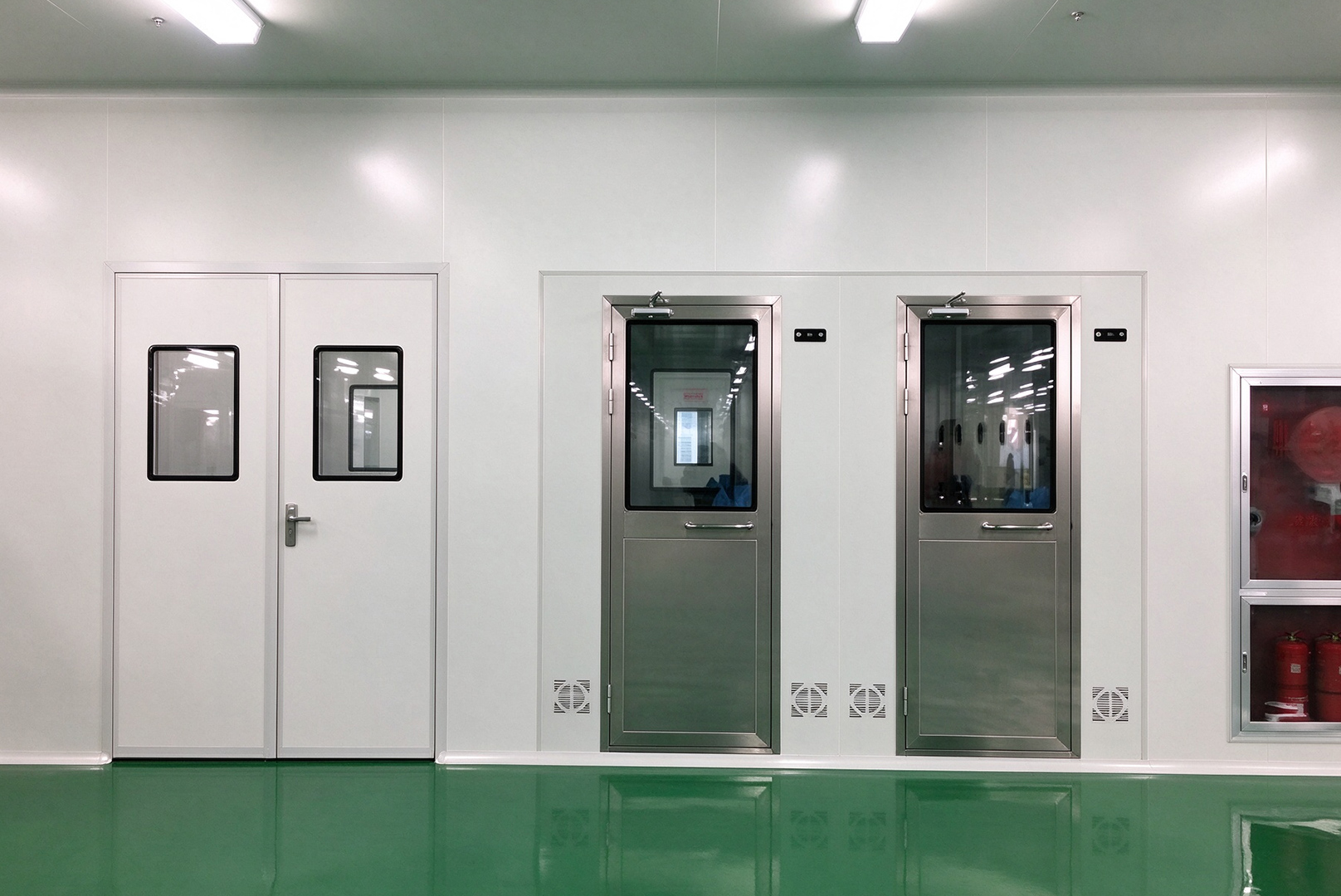
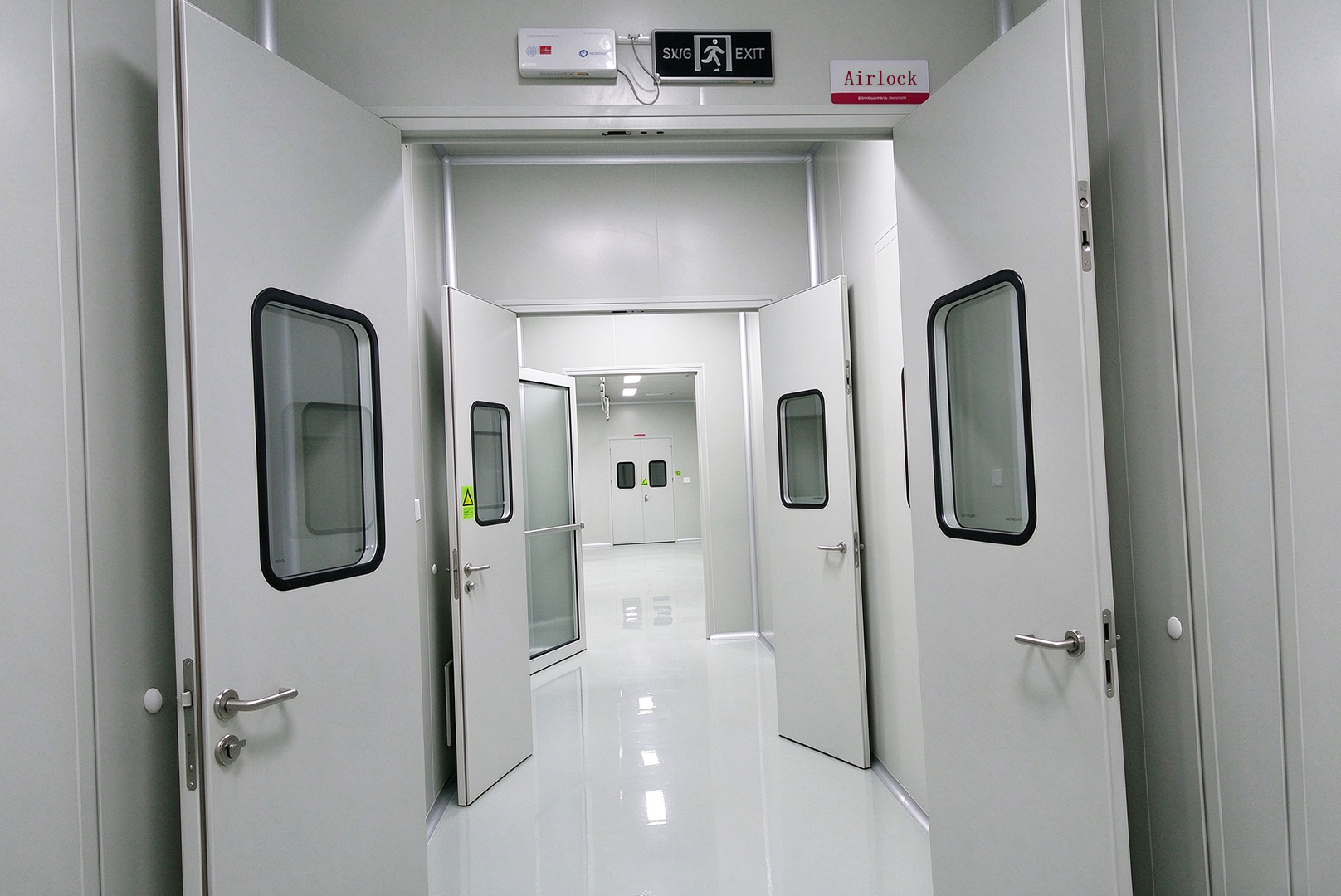
Many clients overlook airlocks, regarding them merely as an extra small room. Cutting budgets by removing airlocks often leads to frequent cleanliness failures, pressure differential loss, and microbial contamination requiring rework — costing several times more in the long run. Drawing on over two decades of purification project experience, an airlock is not an optional accessory. It acts as a mandatory transitional hub separating zones of different cleanroom classifications. Specifications for pharmaceutical GMP, hospital operating rooms, biosafety laboratories and electronic cleanrooms all explicitly mandate buffer facilities.
Specifications require a 5~10 Pa pressure differential between clean zones and ordinary corridors, or areas with varying cleanliness grades. Positive pressure blocks infiltration of contaminated air. However, the pressure barrier collapses instantly once the door is opened. Dust-laden and bacteria-carrying air flows rush directly into the cleanroom. Pressure differential alone cannot intercept massive particles and microorganisms brought in the moment the door opens.
Essentially, an airlock serves as an intermediate transitional air lock chamber fitted with dual-door electronic interlocks, ensuring the two doors can never open simultaneously. For entry: open the outer door first; only after fully closing it can the inner cleanroom door be unlocked. Direct air convection between inside and outside is eliminated, physically cutting off exchange of contaminated airflow. This critical function cannot be compensated solely by pressure differentials or air showers.
The airlock creates a three-stage pressure gradient: High-cleanliness zone > Airlock > Ordinary area. Airflow can only travel from clean areas toward contaminated areas.
Without an airlock, pressure balance collapses during door opening, causing reverse airflow and rendering the entire pressure differential design of the purification system invalid.
The airlock is the only compliant pre-treatment space.
Skipping the airlock for direct access carries large volumes of contaminants straight into high-cleanliness spaces. This drastically increases the load on FFUs and HEPA filters, doubles filter wear and pushes up maintenance costs sharply.
Raw/cooked segregation in food plants, filling and washing zones in pharmaceutical workshops, and bacterial culture operation areas in laboratories differ greatly in cleanliness classification and contamination risk. Physical separation via airlocks is required.
GMP and hospital operating room codes clearly state: airlocks or pass-through boxes must be installed between clean and non-clean areas, or rooms of different cleanliness grades. Designs lacking airlocks will fail acceptance inspections, CNAS audits and hospital infection control reviews. Many small workshops remove airlocks to save money, only to be ordered to rebuild during audits.
Airlocks have compact volume with air change rate ≥15 times per hour. Even if small amounts of dust enter when opening doors, particle concentration can return to standard levels within 1~3 minutes.
In large cleanrooms without airlocks, once heavy contaminated air intrudes, it takes more than ten minutes to recover qualified parameters, continuously endangering production, experiments and surgical safety.
Though seemingly insignificant, the airlock forms the first pollution defense line of the whole clean environment. It intercepts contamination risks caused by door opening within the transitional chamber, safeguarding stable pressure differentials, qualified cleanliness and compliance for acceptance. Whether for medical, food, biopharmaceutical or electronic manufacturing sectors, purification designs ignoring airlocks carry long-term contamination hazards and are not worth the savings.

Capybara cleanroom specializes in cleanroom enclosure system , ceiling system, cleanroom doors and windows and related product development, manufacturing, sales, consulting and services.
 English