We have a passion for unconventional solutions that bring your vision to life.
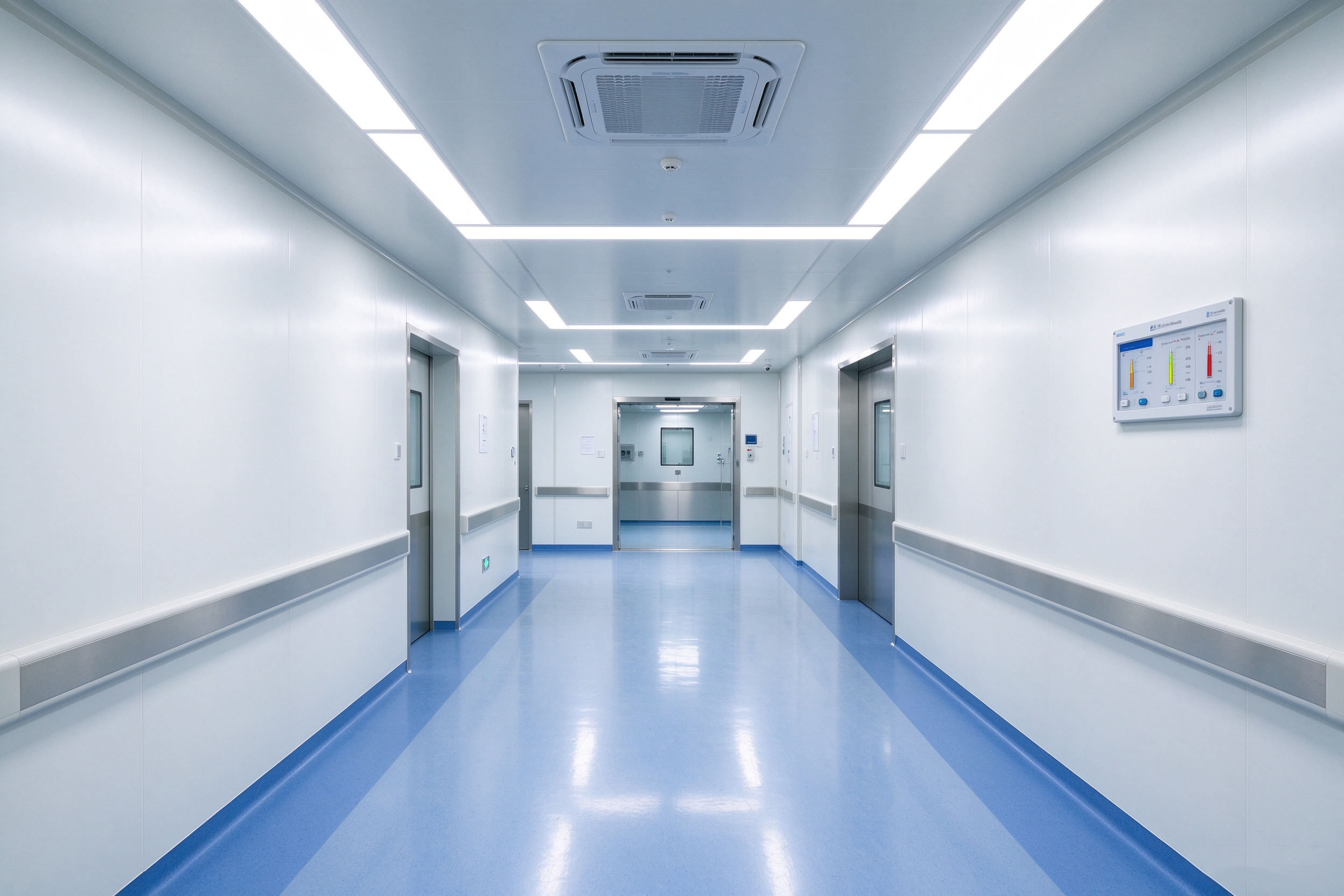
In the field of modern medical purification engineering, there is a disruptive insight: disinfection & sterilization and environmental cleanliness follow two entirely separate logics for healthcare-associated infection (HAI) control.
Traditional HAI management works on the principle of "eliminate pathogens after they appear". Modern engineering thinking aims to prevent pathogens from entering, colonizing and spreading at the source. Shifting from remedial response to full-process environmental control marks the core upgrade of contemporary hospital infection prevention.
Since Lister pioneered the concept of surgical antisepsis, most medical institutions in China have relied on regular manual disinfection for HAI control over the past century. The biggest drawback of this model is that only spot checks are qualified while the whole process remains uncontrolled.
Indicators meet standards right after disinfection. However, human movement, medical operations, skin flakes and droplets continuously generate contaminants. Between two disinfection sessions, airborne bacteria and surface pathogens keep accumulating, and HAI risks persist.
According to measured data in Implementation Guide for Medical Clean Equipment Engineering: The average airborne bacterial concentration in ordinary hospital lobbies, corridors and consulting rooms reaches 2097 CFU/m³, far exceeding WHO safety standards for medical environments.
A more alarming issue is secondary contamination from conventional air conditioning. Dust, bacteria and water accumulate inside air ducts. Recirculating polluted indoor air fails to purify the environment but continuously spreads microorganisms.
Meanwhile, frequent long-term chemical disinfection may trigger secondary problems such as bacterial drug resistance, chemical residues and respiratory discomfort among medical staff.
From an engineering implementation perspective, relying solely on disinfection for infection control is highly unstable and unsustainable.
The core logic of modern medical clean engineering is to abandon passive remediation and build a full-process environmental control system. Instead of pursuing instant sterilization, systematic engineering design maintains a clean environment hostile to pathogen survival over the long term.
The whole system consists of three core dimensions:
Simply put: instead of frequent sterilization, we create an environment where pathogens cannot survive.
With updated medical codes, domestic and international industries have reached a unified conclusion: manual disinfection cannot replace clean engineering systems.
China’s Code for Design of General Hospitals GB 51039-2024 clearly defines air supply dilution, bacteria removal by filtration and air distribution as three basic principles for medical environments, extending process control from special departments to general medical zones.
Authoritative medical standards in Germany, the United States and Japan continuously verify that: High-efficiency filtration, gradient airflow and displacement ventilation systems steadily reduce airborne bacterial concentration and greatly lower surgical site infection risks.
The industry has formed a unified conclusion: debates exist for individual technologies, yet "continuous environmental control via engineering" is the globally recognized bottom line for hospital infection prevention.
The century-long evolution of hospital infection control is essentially a mindset revolution: shifting from passive remediation relying on chemical disinfection to active defense supported by engineering systems.
A genuine medical clean engineering project does not merely deliver one-time qualified test data. It provides a 24-hour stable, fully controllable and dead-corner-free bacteria-inhibiting medical environment.
Future competition in hospital infection control no longer focuses on disinfection frequency, but on whether the environment inherently maintains cleanliness, safety and bacteria suppression.
Making pathogens have nowhere to settle represents the highest standard of modern medical infection prevention.

Capybara cleanroom specializes in cleanroom enclosure system , ceiling system, cleanroom doors and windows and related product development, manufacturing, sales, consulting and services.
 English